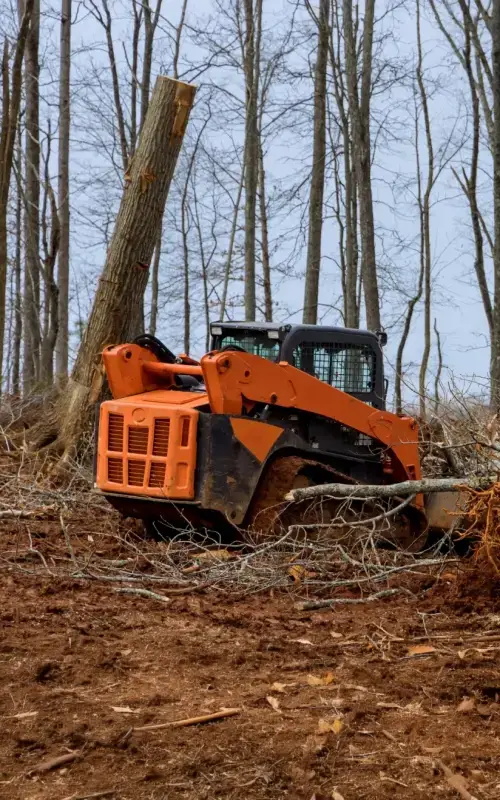
Yes—forestry mulching can be a smart way to open usable ground before winter in Burns, TN. It grinds selected brush and trees into mulch on site, but it does not remove every root or prepare every building pad. The right choice depends on vegetation, access, slope, wet ground, and your next use.
Why plan forestry mulching before winter?
Fall is a useful time to look at overgrown ground. You can see where brush blocks a driveway, where young trees have filled an old field, and where a future homesite or pasture needs room. Planning early also gives the contractor time to check access before wet weather changes the ground.
Winter changes the cleanup choice
Many Tennessee property owners think about burning brush after clearing. From October 15 through May 15, the Tennessee Division of Forestry requires permits for debris pile fires and prescribed fires, and local rules can add more limits. Read the state’s Tennessee burn-permit guidance before planning an open burn.
Forestry mulching does not erase every permit or property-safety question. It can, however, grind much of the selected woody growth in place instead of leaving a large burn-pile plan behind. That may simplify the next step when the goal is usable ground rather than a full excavation.
Did You Know? Tennessee’s state burn-permit window runs from October 15 through May 15. County and city rules may also apply, so a burn plan needs a local check.
Wet ground changes the work plan
Winter work is not just about temperature. Rain can soften access lanes and create ruts under heavy equipment. Low areas may drain slowly, while slopes can send water across a new opening. A good winter plan marks the route in, the work area, and the ground that needs protection before equipment arrives.
This is one reason an acreage-only quote can miss the real work. Two five-acre properties may have very different access, density, slopes, and wet spots.
Winter does not make every property a mulching job
Mulching may fit a wooded lot, an overgrown pasture, a fence line, or a place where you want to keep selected mature trees. It may not fit a project that needs stumps removed, a driveway cut in, a septic area prepared, or a level building pad created. The planned end use matters as much as the brush.
What does forestry mulching do?
Forestry mulching uses a powered cutting head to reduce standing brush, small trees, and woody debris into a layer of mulch on the surface. The work can open sightlines and create a more usable surface without hauling every piece of vegetation away.
What happens to brush and small trees?
The head breaks down selected vegetation where it stands. The final look depends on the growth, moisture, access, machine setup, and the finish the property needs. A mulched area is not the same as a lawn. It may still need seeding, erosion control, follow-up mowing, or another service before it becomes the finished space you have in mind.
What happens below grade?
Forestry mulching mainly handles above-ground growth. It does not automatically remove every stump, root ball, buried obstruction, or unsuitable soil. If the next step is a home, driveway, septic field, pond, or other construction use, ask whether the project also needs land clearing or excavation and site work.
Pro Tip: Tell the contractor what you plan to do with the ground after clearing. “Open the back field” and “prepare a building pad” are different scopes, even when they start with the same brush.
When does forestry mulching beat traditional clearing?
Forestry mulching is often the better fit when the main goal is to reclaim ground while leaving useful trees or natural cover in place. Traditional clearing is often the better fit when the project needs root removal, hauling, grading, or a construction-ready surface.
Choose mulching for selective opening
Mulching may make sense for:
- Thick brush around an existing field or homesite
- Overgrown pasture that needs access and visibility
- Fence lines and property edges
- Selective tree and underbrush removal
- A wooded area where some mature trees should remain
Choose land clearing or excavation for below-grade work
A project may need a different service when the scope includes stump removal, soil movement, driveway excavation, drainage work, or a building pad. Freedom Land Management lists forestry mulching as one service and also lists land clearing and excavation because those jobs solve different ground problems.
The right answer may also be a combination. A contractor might mulch one section, clear another, and excavate only where a driveway or structure will go. That is more useful than forcing every acre into one method.
How Freedom Land Management prices a winter job
Freedom Land Management is based in Burns, and its live homepage describes an owner-operated process. Josh Tant walks the property, reviews the work area, and runs the machine. The site says the estimate looks at acreage, vegetation density, terrain, and access before a price is given.
What the owner looks at
An on-site review should cover the entry route, gates, slopes, wet areas, fence lines, utilities, trees to keep, and the edge of the work zone. It should also cover whether the mulch can stay where it lands or whether the property needs another cleanup step.
What a free estimate should answer
Ask what the price includes, what stays, what happens to stumps and roots, whether follow-up work is separate, and what weather could delay the start. If the machine or access is not a fit, the live site says the company will say so instead of taking the job anyway. That direct answer is useful before winter ground conditions tighten the schedule.
How to prepare a Burns, TN property
A short preparation list can make the estimate more useful and the work area safer.
Mark what stays and what goes
Walk the property before the estimate. Mark mature trees, fence lines, property pins, septic areas, wells, structures, access lanes, and any brush that should remain. Take a few wide photos from the entrance and from the planned work area.
Check utilities and project rules
If the work includes digging, excavation, or ground disturbance, contact Tennessee 811 before work begins. For larger construction-related projects, the Tennessee Department of Environment and Conservation’s NPDES construction permit resources explain requirements tied to qualifying soil disturbance. Those rules do not apply the same way to every rural clearing project, so confirm the scope that fits your property.
Book around the ground, not just the calendar
September is a good time to start the conversation if the property needs work before winter. The estimate can identify access problems, clarify the service, and show whether the job should be scheduled as one visit or split into stages. Weather still controls the final start date, but early planning leaves more room for a safe plan.
Frequently asked questions
Is forestry mulching a good choice before winter?
Often, yes, when the goal is to reduce brush and open usable ground before wet weather. It is not the right choice for every property, so the estimate should review access, slope, soil conditions, trees to keep, and the next use of the land.
Does forestry mulching remove stumps and roots?
Not automatically. Forestry mulching mainly reduces above-ground vegetation and leaves a mulch layer. If the project needs root removal, grading, a driveway, septic preparation, or a building pad, ask whether land clearing or excavation should be added.
How much does forestry mulching cost in Burns, TN?
There is no responsible flat price without seeing the property. Acreage, brush density, terrain, access, wet areas, trees to keep, and the finished use all affect the scope. A free on-site estimate gives the contractor the information needed to price the actual ground.
Do I need a burn permit if I use forestry mulching?
A mulching plan is different from an open burn, but the state burn-permit rules still matter if you plan to burn remaining debris. Tennessee requires permits for covered debris fires and prescribed fires from October 15 through May 15, and local rules may add requirements.
Can forestry mulching prepare a building site?
Sometimes it can be one part of the work, but mulching alone does not promise a construction-ready pad. A building site may need stumps removed, soil moved, drainage addressed, utilities considered, and the ground graded. Ask for a site-specific scope before choosing the service.
Plan the winter work around the ground
Forestry mulching can be a practical way to reclaim brushy ground before winter, but the method should follow the property’s use. Start with the trees and brush you want removed, the trees and features you need protected, and the access route equipment will use. Then have the site reviewed before you choose between mulching, land clearing, excavation, or a combination.
Freedom Land Management offers free on-site estimates for properties around Burns and Middle Tennessee. Share the location, acreage, access limits, and your winter goal so Josh can give you a scope based on the actual ground.